
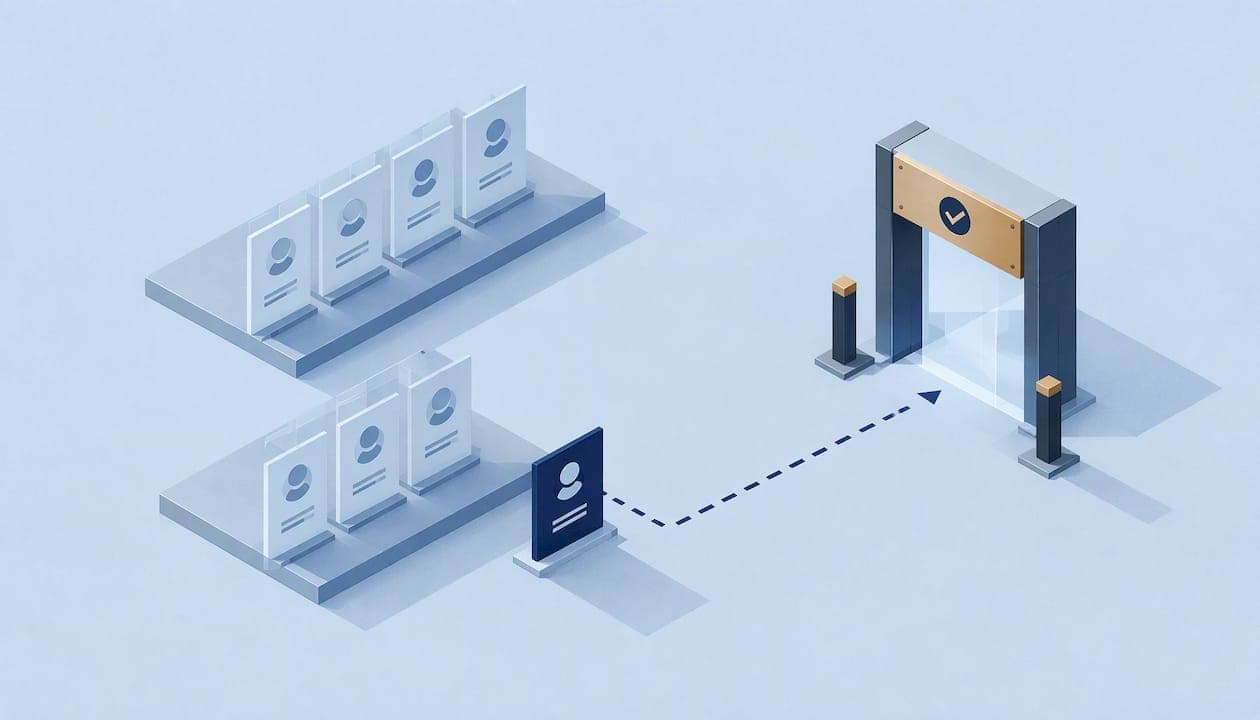
The best approach to attendance fraud detection is a hybrid: targeted technology such as biometric liveness checks, geofencing and machine learning anomaly alerts, paired with supervisor approval and sampling audits. U.S. GAO reporting and academic research on buddy punching point the same way. Configured and audited correctly, this stops most buddy punching and time padding.
TL;DR:
- Field crews need GPS captured only at clock in; shared kiosks benefit from rotating QR codes and device checks, while badges need shift pattern checks.
- Treat clustered device IDs, repeated rounded punches, and impossible travel as leads, not proof; supervisors should verify location, device records, and employee explanations before discipline.
- Separate timecard approvers from employees they approve, certify reviewed records, and sample both flagged and unflagged punches to test controls and tune alert thresholds.
- Store non reversible face embeddings rather than raw images, limit location capture to clock in, publish retention terms, and check local rules before biometric enrollment.
Table of Contents
- Which detection methods stop which kinds of fraud?
- What fraud patterns show up in your attendance logs?
- How do policy, internal controls, and technology fit into one workflow?
- How should you use analytics and machine learning on attendance data?
- How do you protect employee privacy while detecting fraud?
- What does a 30–90 day rollout look like?
- Our view: why the hybrid approach works
- How can one platform put this playbook into practice?
- FAQ
- Sources
Which detection methods stop which kinds of fraud?
Match the control to the fraud you actually see. Researchers trace buddy punching to weak authentication such as shared PINs and recommend checks built into the device itself. These are the main options:
- Face recognition with liveness checks: stops one person punching in for another. Best for fixed sites and field teams alike. Require periodic re-enrollment so templates stay accurate.
- Geofencing and GPS-verified clock-ins: stops clock-ins from the couch or the parking lot. Best for field crews. Capture location only at the moment of the punch.
- Dynamic QR codes and device checks (IMEI): reduces credential sharing and fake devices. A university study combines these with geofencing. Best for sites with shared kiosks. Rotate codes often.
- Photo verification: gives a supervisor visual proof at the punch. Best for remote job sites. Store photos briefly and restrict access.
- RFID or badge readers with server-side checks: badges alone get lent out, so compare each tap against shift patterns. Best for plants and warehouses.
- Timesheet anomaly scoring: flags statistical outliers across the whole workforce. Best when you have several months of history to learn from.
No single method covers every gap. A badge reader plus anomaly scoring catches more than either alone, and a face check plus geofence closes the remote-punch loophole.
What fraud patterns show up in your attendance logs?
You can search for red flags before you buy anything new. Start with these three families of signals.
Buddy punching leaves clustered fingerprints. Look for several employees punching from one device ID, geolocations stacked on the exact same coordinates, and clock-ins landing at nearly the same time.
Time padding is quieter. Watch for punches that always round up by a few minutes, the same extra stretch added to every shift, and overtime spikes concentrated on a handful of people while their coworkers on the same job stay flat.
Duplicate or impossible clock-ins show up as overlapping shifts or travel math that fails. If someone clocks out at one site and then clocks in at a distant site soon afterward, one of those records may be wrong.
Treat every one of these as a lead, not a verdict. Anomaly detection is a triage tool that tells a supervisor where to look first. A flagged record becomes a case only after someone checks corroborating evidence, such as device data, location and a conversation with the employee.

How do policy, internal controls, and technology fit into one workflow?
Technology is an enabler. GAO found that first-line supervisors usually carry the main duty of monitoring attendance, that manual review fails without personal knowledge of the employee, and that tech works best alongside clear policies, separated duties for timecard approval and periodic testing of controls. A government time-and-attendance guideline adds certified records and tight control over changes to completed time reports.
Write down these policy elements first: approved clock methods, authentication rules, geofence radii, and retention and disclosure terms. Then wire in the controls. A timecard approval workflow keeps approvers separate from the people they approve, and timesheet attestation makes each supervisor certify what they reviewed. When verified attendance data feeds payroll, an export like the one MDMS offers for equipment dealers reduces manual reconciliation.
Run every exception through the same path:
- An automated rule or score flags the record.
- The supervisor reviews it against what they know about the shift.
- Corroborating evidence is pulled: GPS, device ID, photo.
- HR investigates only if the evidence holds up.
- Sample audits test whether the whole chain works.
How should you use analytics and machine learning on attendance data?
IEEE research treats machine learning on biometric logs as a workable control when the output is alerts that humans review. A common technique is an isolation forest, which scores records by how easy they are to separate from the crowd. A punch pattern nobody else shares gets a high score. It tends to surface rare travel patterns, duplicate records and extreme outliers.
Audit teams already do this at scale. A continuous monitoring review used analytics to scan for duplicate records, excessive overtime and missing entries, then validated exceptions with samples and follow-up questions.
To keep alerts workable:
- Set score thresholds so reviewers see the top of the list first.
- Never act on a score alone. Require device or location metadata first.
- Baseline historic behavior, sample-audit flagged and unflagged records, and retune the model on a schedule.
Pro Tip: Combine device metadata such as IMEI and app integrity with behavioral signals before you escalate. Our guide to fake GPS detection explains the server-side checks.
How do you protect employee privacy while detecting fraud?
Trust is part of the control. The Dutch data protection authority's works council booklet recommends storing biometric data as non-reversible embeddings instead of raw images, limiting background location tracking to configured work hours, consulting works councils, and running a data protection impact assessment (DPIA) when tracking is intrusive.
In practice, that means:
- Save face embeddings, not photos, and restrict who can access them.
- Capture location at clock-in only, as we describe in our event-based geofencing guide.
- Publish the purpose and retention period in plain language.
- Let employees explain a flagged anomaly before any discipline starts.
Check the rules in your own jurisdiction before you enroll anyone in biometrics.
What does a 30–90 day rollout look like?
Follow these steps and assign an owner to each:
- HR and IT: map your clock methods, payroll links and known fraud risks.
- IT: pick minimal pilot controls, such as a geofence and an identity check.
- HR: set the rules, radii and approval chain. Our GPS-verified clock-in guide helps with the first draft.
- Supervisors: run the pilot with sampling and randomized check-ins on field crews.
- HR and IT: review results and adjust thresholds.
- HR: train approvers and tell staff what changes and why.
- All roles: scale and schedule recurring audits.
Document every decision. Written records are what make the program defensible later.
Our view: why the hybrid approach works
We think detection fails when any one layer works alone. Technology without supervisor review produces noise, and policy without verification invites workarounds. When identity checks, location rules and sampling audits run together, accuracy rises and managers spend their time on real exceptions. Privacy-by-design choices, like event-based location and liveness checks, are what keep employees on board.
— Clock-me
How can one platform put this playbook into practice?
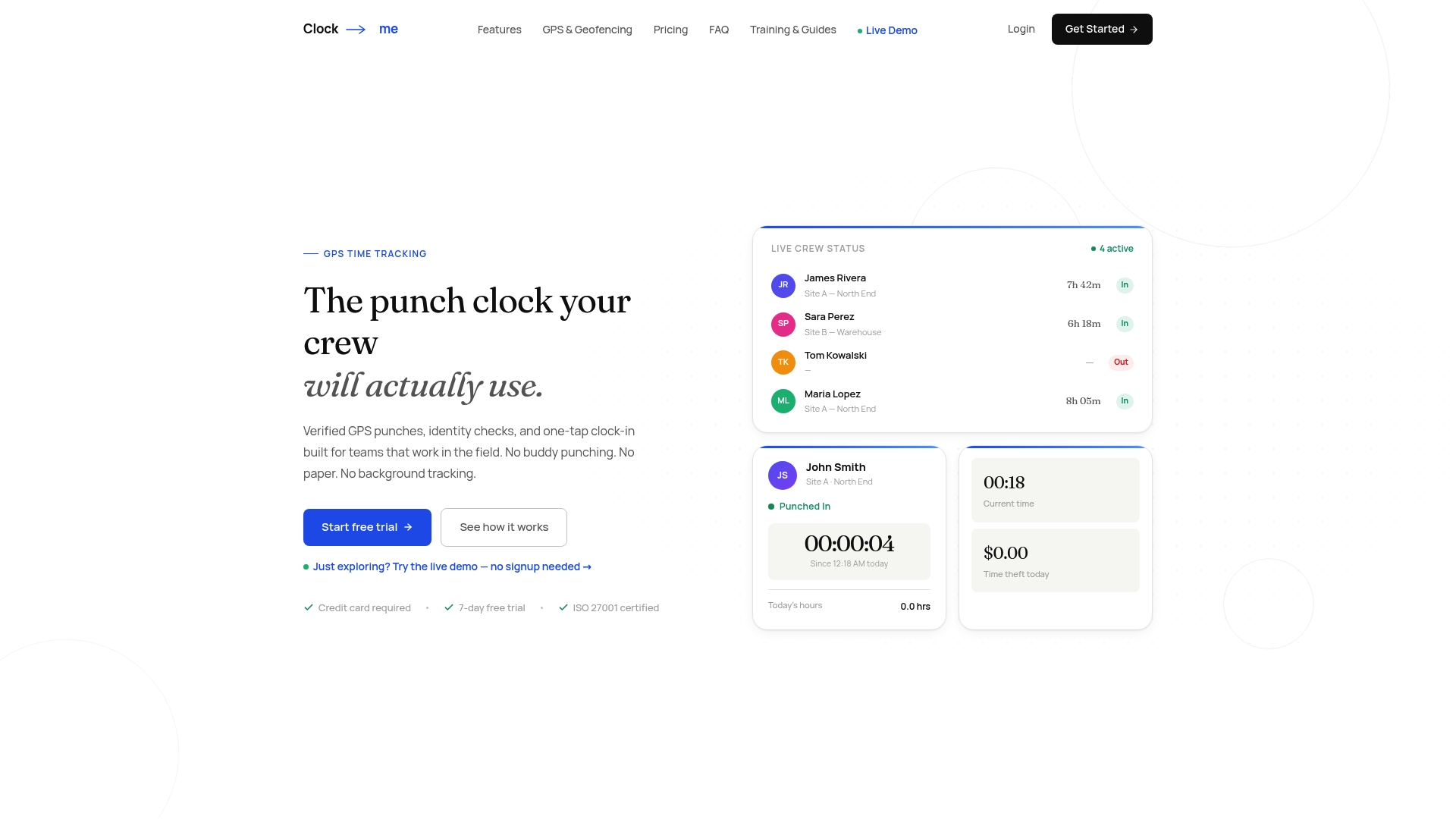
With Clock-Me, we combine GPS-verified clock-ins, identity verification, geofencing and timecard attestation in one place, so you spend less time stitching tools together and more time reviewing real exceptions. We also give managers live dashboards for field teams. See the solutions page, which includes a free plan.
FAQ
What is the best face recognition software for attendance?
The best option is one that pairs face matching with liveness detection, so a photo or video cannot stand in for a person. It should also store non-reversible templates and log every punch for audit. Test it on your own workforce before you commit.
What evidence is needed to prove attendance fraud?
You need corroborating records, not a single alert: device IDs, GPS or geofence data, photos and supervisor knowledge of the shift. GAO's findings stress that supervisors who know their people are central to catching problems. Give the employee a chance to explain before discipline.
What is the RFID attendance system?
An RFID system records attendance when an employee taps a badge or card on a reader. It is fast, but badges can be lent to a coworker. Pair it with server-side anomaly checks or a second identity check to close that gap.
What is the most common method of fraud detection in organizations?
Reviewing exception reports and sampling records is one way organizations can look for attendance problems. Audit teams pair analytics that flag duplicates and excessive overtime with sample-based follow-up. Automation narrows the pile, and people confirm what is real.
Sources
- Time and Attendance: Agencies Generally Compiled Data on Misconduct, and Reported Using Various Internal Controls for Monitoring | U.S. GAO
- Biometrics and Beyond: Innovating Against Buddy Punching Losses
- Topic/Issue: FY 2024 Continuous Monitoring for MyTime Meeting and Date: Audit Committee, June 18, 2024 Staff Lead: Danielle Moore
- Machine Learning for Attendance Fraud Detection in ...